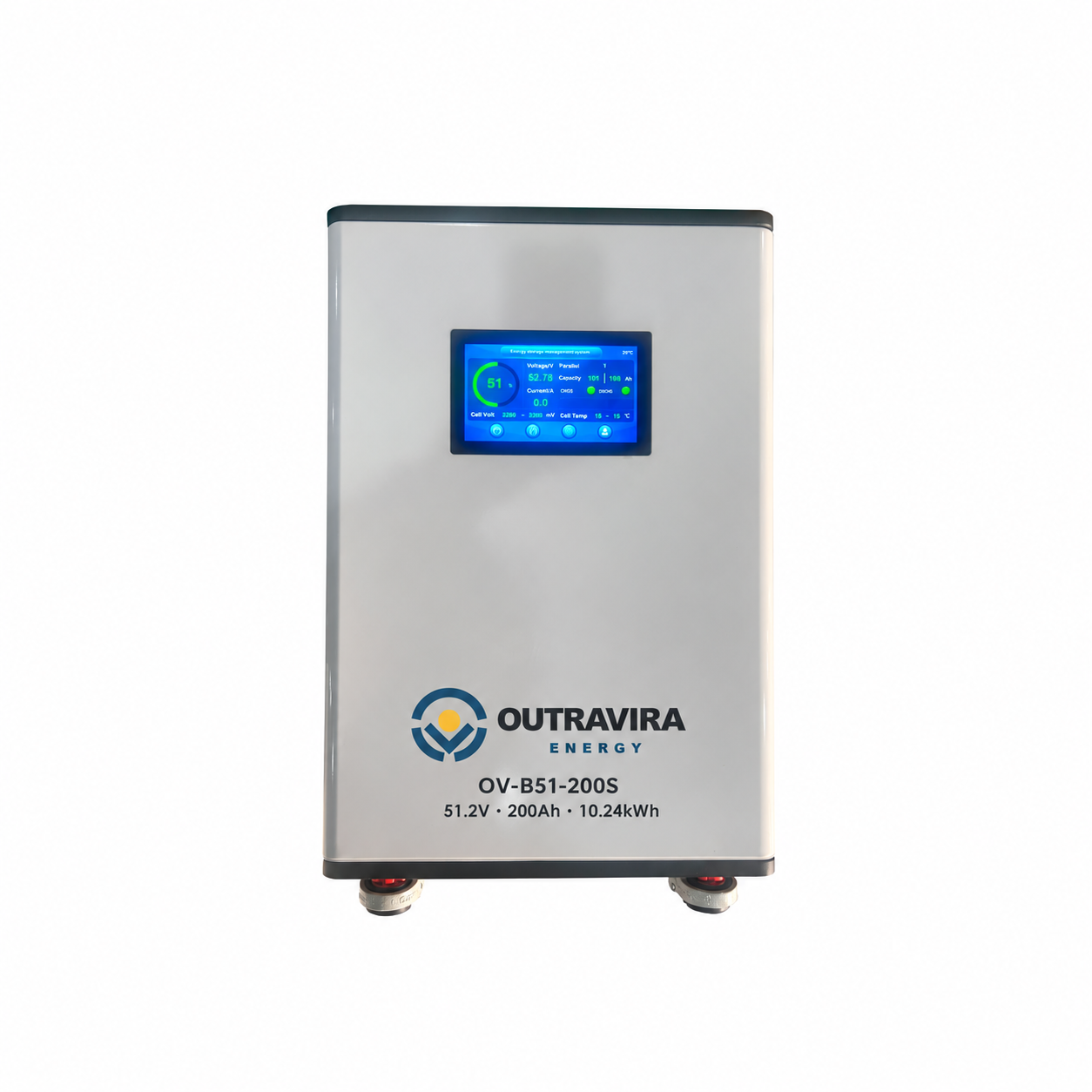
51.2V off-grid · configurable project baseline

OV-B51-200S

A modern vertical 51.2V 200Ah LiFePO4 starting point for higher-autonomy off-grid projects. Enclosure branding, communication, inverter matching, documentation and market configuration are confirmed for each approved project.

Nominal voltage51.2V
Rated capacity200Ah
Rated energy10240Wh
Published continuous charge / discharge100A*
Outravira OV-B51-200S 51.2V 200Ah configurable LiFePO4 battery

01 · Use case

Who It Is For

Start from the energy budget, no-solar autonomy target and peak loads before choosing the larger battery.

A configurable higher-autonomy platform—not a universal upgrade.

  • Remote cabins, small commercial sites and longer off-grid operating windows
  • Projects with a measured energy demand that justifies approximately 10.24kWh nominal storage
  • Installers able to plan structure, handling, protection and commissioning around an approximately 85kg vertical unit
  • Private-label or channel projects that need the final enclosure, labeling, BMS, communication and documentation confirmed together

02 · Public reference baseline

Confirmed Specifications

These published values support initial screening. The approved quotation, sample and signed project specification control the production order.

Battery chemistryLiFePO4Integrated BMSYes
Nominal voltage51.2VRated capacity / energy200Ah / 10240Wh
Published continuous charge / discharge100A*Dimensions410 × 255 × 598mm, wheel-free*
WeightAbout 85kgLocal monitoring7-inch touch display
Published communicationBluetooth / WiFi / CAN / RS232 / RS485*Published enclosure ratingIP20*
Published expansionUp to 16 units in parallel via RS485*Final product versionConfirmed per approved project

*Project confirmation required: verify the exact BMS, communication protocol, inverter compatibility, current conditions, terminals, charging values, parallel rules, enclosure branding and selected-market documentation before installation or production.

03 · Electrical review

System Compatibility

A larger energy figure does not confirm inverter power, charging rate, autonomy or expansion behavior.

Design from loads and recharge conditions.

  • Daily energy, peak load, surge load and days of autonomy
  • Inverter/charger limits, AC version and approved battery settings
  • MPPT and solar-array operating window across temperature
  • BMS current, communication, backup charging and future expansion

Approval boundary

Inverter compatibility, communication protocol, parallel quantity, certification, cycle life and warranty remain unconfirmed until the exact project version is supported by written evidence.

04 · Site review

Installation Inputs

The installation must account for the enclosure, high unit weight, access, cable routing and site conditions.

01

Envelope

Published wheel-free reference: 410 × 255 × 598mm. Confirm wheels, terminals, tolerances and service clearances.

02

Weight & handling

Published reference: About 85kg. Confirm floor loading, restraint, lifting/handling plan and service access.

03

Electrical interfaces

Confirm terminals, polarity, cable size, isolation, fuse/breaker, earthing and inverter communication.

04

Environment

Published enclosure reference is IP20. Confirm temperature, moisture, dust, ventilation, altitude and approved installation orientation.

05 · Evidence pack

Documents Available

Status applies only to the exact approved version; similar-model reports are not treated as evidence.

Public Reference Values

Available

Voltage, capacity, energy, published discharge, dimensions and weight for initial screening.

Datasheet

Project confirmation required

Request the signed electrical and mechanical version before order approval.

Dimension Drawing

Project confirmation required

Final enclosure, supports, terminals, clearances and tolerances must match the sample.

UN38.3

Project confirmation required

Verify report identity against the ordered battery version before transport planning.

Installation Guide

Project-specific

Prepared around approved equipment, protection, mounting and commissioning inputs.

Communication Protocol

After technical review

Required only when the selected BMS and inverter integration are confirmed.

06 · System review

Request a Compatibility Review

Send daily energy, peak and surge loads, autonomy target, solar array, MPPT, inverter/charger, backup charging, installation environment, market and desired product configuration.

Expected output

System starting pointVoltage and capacity shortlist with open assumptions
Configurable product versionEnclosure, branding, communication and market requirements
CommissioningProject-specific settings and checks after approval
Start off-grid reviewRequest model compatibility review →